metal care
TO PROTECT the integrity of your jewelry, please observe the following care guidelines:
Chemicals & Water:
Keep all pieces out of chlorine pools, hot tubs, saunas, steam rooms, and saltwater. While an accidental dip won't hurt, frequent exposure to chlorine, intense heat, or heavy sweat will permanently dissolve copper/bronze accents on silver designs and weaken solid copper structures over time.
Daily Products:
Allow hand sanitizers, lotions, cosmetics, and harsh cleaning detergents to dry completely before putting on your jewelry.
Physical Impact: Jewelry is not indestructible. To prevent warping, deep scratching, or snapping, remove rings during heavy metal-on-metal activities such as cycling, weightlifting, or working with metal tools.
IN THE STUDIO
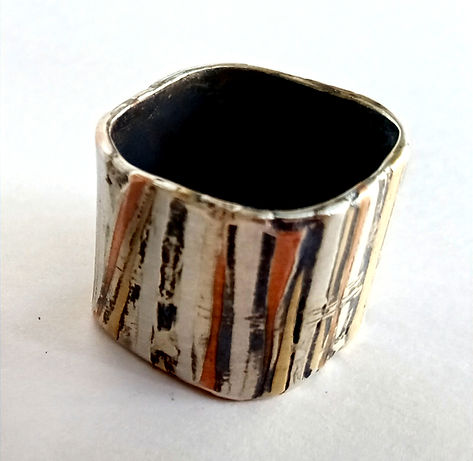
My practice is rooted in a zero-waste approach where no metal is discarded; all off-cuts are recycled back into my new designs. This allows me to work sustainably while honoring the metals I’ve chosen for my palette:
Sterling Silver (with occasional Gold accents)
Copper
Bronze
UNDERSTANDING THE METALS
STERLING SILVER (.940)
Argentium Sterling Silver is a modern alloy that is purer and more hypoallergenic than traditional sterling silver (.925). It is made from 100% recycled silver, supporting environmentally responsible practices by eliminating the need for newly mined silver.
COPPER & BRONZE – THE LIVING METALS
Utilized for millennia across cultures, these metals are prized for their durability and the way they respond to their environment. Rather than remaining static, they develop a deep, weathered patina over time.
When unsealed Copper and its alloys are worn close to the skin, they can respond to environmental factors like heat, stress, or saltwater. This can cause a harmless green or bluish mark on the skin. This is not an allergic reaction, but a simple chemical exchange that is easily washed off with soap and water.
There is a distinct beauty in allowing these metals to age and change alongside you.
For unsealed pieces, the metal is simply a canvas for your unique chemistry to create its own personal patina.
PROTECTIVE SEALS for COPPER & BRONZE
To balance the natural evolution of these metals with daily wearability, I use two different sealing methods:
-
Museum-Grade Sealant: Used for brighter finishes where I’ve chosen a specific balance of color and shine. This professional sealant provides a durable, long-wearing barrier that preserves the polish and locks in the finish without any interaction between the metal and the skin.
-
Traditional Oil Seal: A breathable, plant-based finish used for hand-patinated pieces and more substantial, sculptural designs. This preserves the metal’s character while providing an initial protective barrier that you can easily refresh at home.
-
Unsealed Options: I choose to leave select pieces unsealed to highlight the natural, undomesticated beauty of the medium. You can browse my current collection of unsealed work, or commission a custom piece If you prefer direct, metal-to-skin contact.
DAILY CLEANING AND CARE
-
Basic Cleaning (All Metals)
Use plain warm water and a mild, non-detergent soap (such as a plain Castile soap with no essential oils or other additives) for everyday dirt. Always rinse thoroughly and pat dry; removing moisture helps you control how the metal's character develops. -
Caring for Museum-Sealed Pieces
Do NOT use abrasives, baking soda, or treated polishing cloths on these pieces, as they can wear away the sealant. A simple rinse with mild soap and water followed by a thorough drying is all that is needed. -
Refreshing Highlights (Silver & Oil-Sealed Pieces)
To restore contrast on raised edges, mix 3 parts baking soda to 1 part water into a thick paste. Use your finger to rub the paste onto outside high points only for 20 seconds. Rinse and dry thoroughly until all traces of the paste are gone, then buff the metal with a clean, jewelry-only microfiber cloth to keep your protective oil barrier intact.-
For Silver: Since silver is unsealed, you can refresh the entire piece as needed.
-
For Oil-Sealed Copper/Bronze: Avoid using the paste on the inside of the band.
-
SAFE HOME RE-SEALING
(Note: These instructions apply specifically to Copper/Bronze pieces with the Traditional Oil Seal.)
If the inside of your copper ring starts to discolor your finger, it is time to refresh that barrier at home:
-
Prep: Wash the inside of the ring with mild, non-detergent soap and warm water. Wipe the inside only with rubbing alcohol and dry completely.
-
Apply Oil: Use a cloth to apply a trace amount of Grapeseed Oil to the inner band. It should be a barely-there layer—it should not look wet or greasy.
-
Heat: Set the ring on a heat-safe wooden surface. Use a hair dryer on its hottest setting for 3–5 minutes until the ring is hot to the touch.
-
Bond & Polish: While the ring is still warm, use a dedicated microfiber cloth to buff the metal vigorously.
-
Cure: Let the ring cool completely to "set" the seal.
-
Troubleshooting: If the surface feels sticky after cooling, you likely used too much oil. Simply wipe the excess away firmly with your cloth and reheat for one more minute to harden the seal.
-
Frequency: Refresh once a month, or more often depending on your level of daily activity.
INDIVIDUAL BODY CHEMISTRY & pH BALANCE
Every person's interaction with copper and bronze is unique. Factors such as diet, stress, and hydration levels all influence your skin’s pH balance. Depending on your unique chemistry, the MUSEUM-GRADE SEALANT can provide an effortless barrier for a few years or a few decades, depending on wear and care. If you find the seal has eventually worn down, please contact me for a professional re-seal in my studio.
For pieces with the TRADITIONAL OIL SEAL, a more acidic pH may simply require more frequent home refreshing.
For those who go UNSEALED your unique chemistry becomes the final ingredient in the metal's ever-evolving patina.